
Most business or portfolio websites take about 3–7 days from approved design to launch. Landing pages can move faster than that, while larger or custom-functionality sites — think e-commerce, booking systems, or multi-language content — typically take longer. The real driver of timeline isn't the build itself so much as how quickly content, feedback, and approvals move on your end.
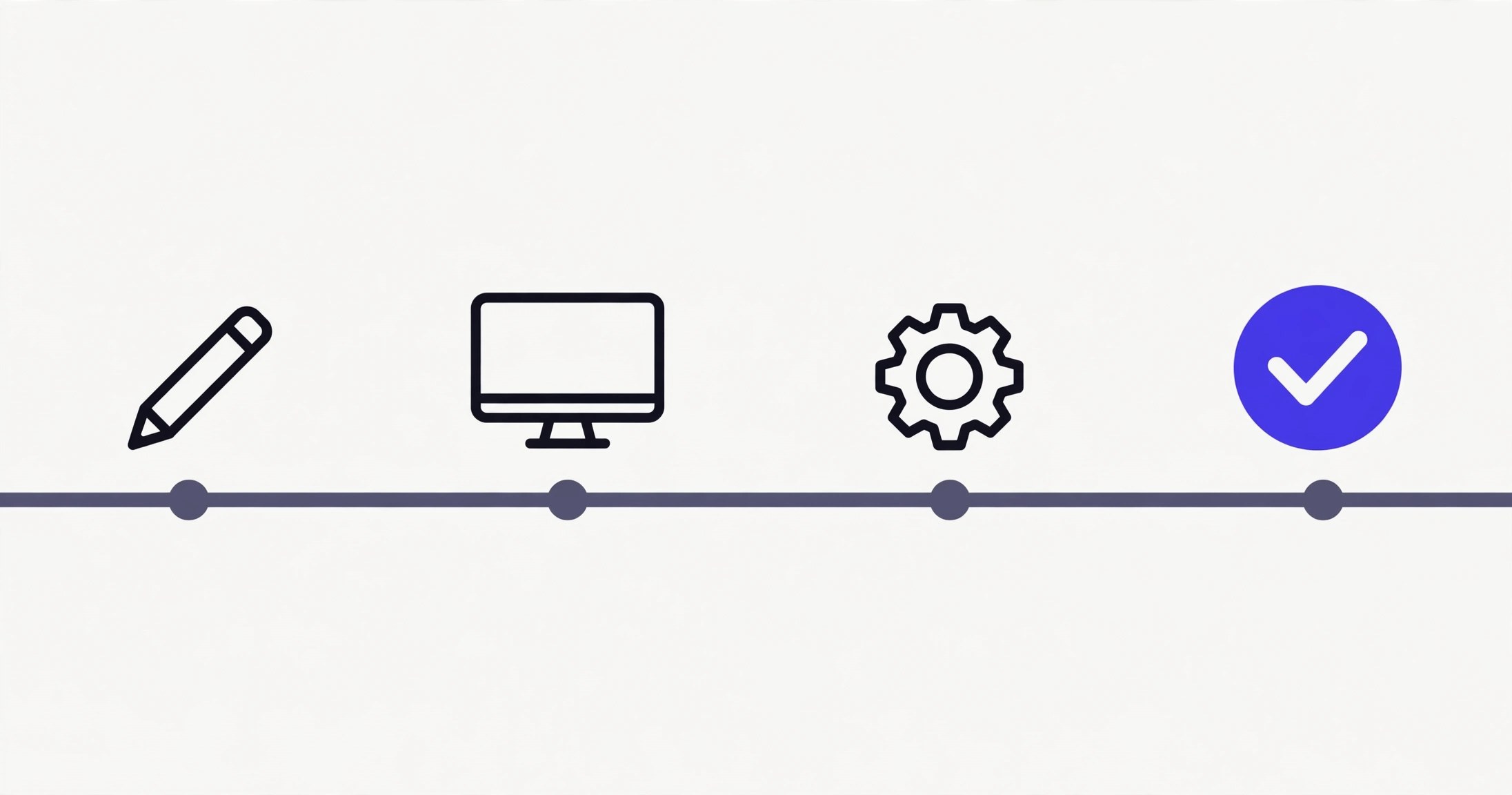
The stages of a website project, and how long each takes
1. Discovery and planning
This is where we understand what your business does, who the site needs to speak to, and what pages and features it needs. For a straightforward business site, this stage is usually quick — a day or two of back-and-forth. It stretches out if you're still deciding on your own structure or content.
2. Design
We design the visual layout — colors, typography, page structure — before writing any code. This is the stage most affected by revisions: a design approved on the first look moves fast, while several rounds of changes will extend the timeline proportionally.
3. Development
Once the design is approved, building the actual site typically takes the bulk of the 3–7 day window for a standard business site. This includes making it responsive across devices, wiring up forms, and testing links and functionality.
4. Content placement and QA
Your text, images, and logo get placed into the built site, followed by a testing pass — checking every page on both desktop and mobile, testing forms, and confirming nothing is broken before launch.
5. Launch
Once everything is approved, the site goes live — connecting the domain, setting up hosting, and a final check that everything works in the live environment.
What speeds a project up
- Having your logo, text content, and images ready before the project starts
- Giving clear, complete feedback in one round rather than small changes spread across many messages
- Choosing a design direction quickly rather than requesting multiple full redesigns
- Sticking to a simpler page structure — fewer pages and features means faster development
What slows a project down
- Waiting on content — text or photos — that isn't ready yet
- Repeated late-stage changes to structure or design direction after development has started
- Adding new features (a booking system, a payment gateway) partway through the build
- Slow response times during the feedback and approval stage
Realistic timeline examples
| Project type | Typical timeline |
|---|---|
| Single landing page | 2–4 days |
| Standard 3–5 page business site | 3–7 days from approved design |
| E-commerce or custom-functionality site | Longer — scoped individually based on features |
These ranges assume content and feedback move at a normal pace on your end — see our website pricing breakdown for how project scope also affects cost, not just timeline.
How we keep timelines realistic
We'd rather give you an honest, slightly conservative timeline than promise something fast and miss it. Before any project starts, we confirm what we need from you — content, approvals, and feedback — and roughly when, so the timeline we quote actually holds. You can read more about the full step-by-step of how a project runs in our process breakdown, or reach out through our contact page to get a timeline for your specific project.